🤖

Why AI Agents?

From chatbot to co-worker

The chatbot is a consultant you call, and forgets everything between calls. AI agents are a team of co-workers who assist you to get the work done (Ballestero, 2026). They can read files, run code, remember your conventions, and work across a whole project — not just a single conversation. That's why we're using Claude Code.

What agents do well
Handle repetitive tasks that slow down your workflow
Read data, run code, get estimates, draft text
Apply your rules and conventions consistently across a project
What agents don't do well (yet)
Guarantee that output is correct — always verify
Think like a domain expert — that's still your job
📁

Project Folder Structure

A clean foundation for every project

Claude works best when your project has a predictable layout. A consistent structure means you spend less time explaining where things are and more time getting work done.
Recommended layout
my-project/
  CLAUDE.md
  skills/
  data/
    raw/
    cleaned/
  scripts/
  figures/
  tables/
  manuscript/
Why this matters
Claude reads your folder structure to understand the project. Messy folders = confused agent. This layout is the same pattern used across CGD's AI Team workflows.
📄

The CLAUDE.md File

Your project's rulebook

CLAUDE.md is a short text file (like a simple document) that Claude reads at the start of every session. It's where you put your project overview and ground rules — so you don't have to explain the same things every time you open Claude.
What goes in it
1
A brief description of the project and its goal
2
File naming and output conventions
3
Tools and libraries in use
4
Anything Claude should never do (e.g., delete raw data)
Keep it under ~150 lines
Beyond that, context quality degrades. Write it like you're onboarding a very capable new Research Assistant who reads carefully but needs clear instructions.

What Are Skills?

Reusable instructions for recurring tasks

Skills are instruction files that live in your skills/ folder. Each one teaches Claude how to do a specific, recurring task — formatted the way you want it done.
Think of a skill as a guide you'd write for a new research assistant: detailed enough that they can run the task independently, every time, without asking you the same questions twice.
How it works
1
Write the skill once — describe the task, inputs, outputs, and any rules
2
Save it as a plain text file in the skills/ folder inside your project
3
Claude picks it up automatically and applies it every session

Ready to get started? Head to Set Up →
📓

OneNote Desktop

This is where your meeting notes live

OneNote Desktop is pre-installed on your CGD laptop.
Login: Sign in with your existing Microsoft / CGD work account.
⚠️ Claude will have access to all notes under your Microsoft account. Use your CGD email for OneNote login.

After install

1
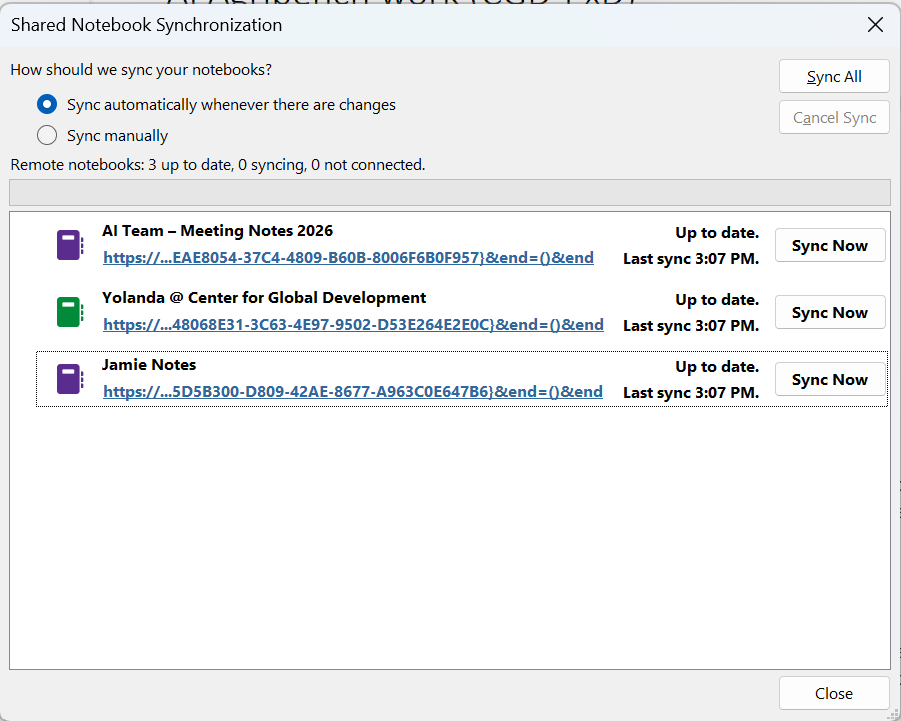
Enable auto sync: go to File → Info → View Sync Status, choose Sync automatically whenever there are changes
OneNote sync settings
🎙️

Jamie

A bot-free AI meeting notetaker that transcribes your meetings
↓ Download Jamie
⚠️ If you use your CGD email, you will need to get IT approval to download Jamie, please pin Ingrid and let her take remote control of your CGD laptop to enter admin login.
Login: Create a Jamie account with your email.
1
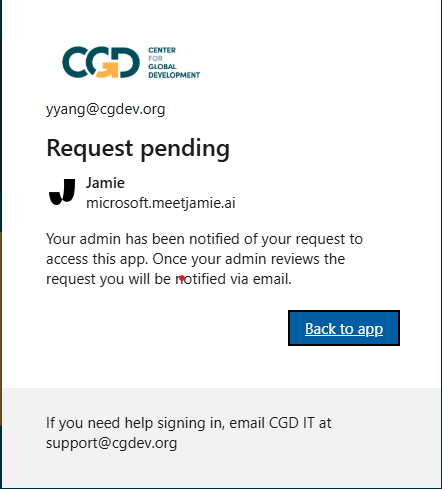
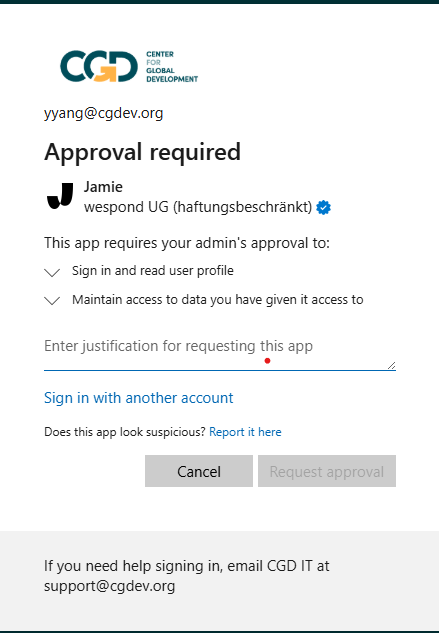
Jamie will prompt you to a request page — type "need Jamie for AI Initiative internal usage" then click Request approval.
Jamie request page
2
After submitting you will see a confirmation — it may take time for IT to process. If urgent, ping Ingrid directly. When approved, you will receive an email from Microsoft Security (MSSecurity-noreply@microsoft.com) with the subject line ”Request for access to Jamie Approved”.
Jamie request post-submission confirmation

After install

1
Go to Settings → Integrations → OneNote, click Connect OneNote, and choose the same account you used for OneNote Desktop.
⚠️ If you used your CGD email for OneNote, you'll need to repeat the IT approval process.
2
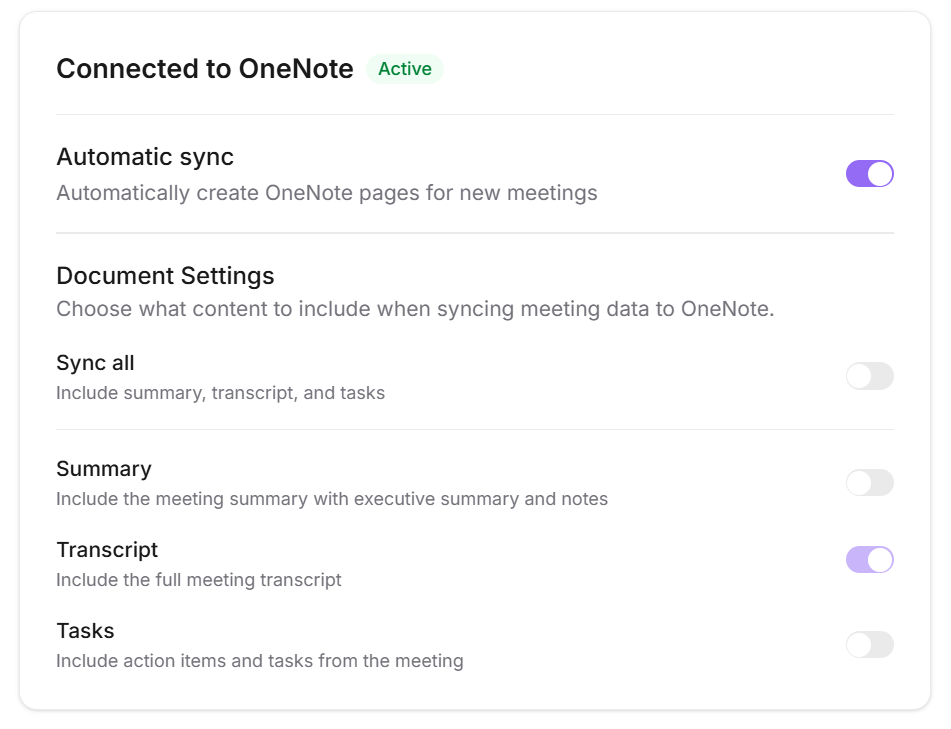
Go to Settings → Integrations → OneNote, scroll down and turn on Automatic sync and enable Transcript.
Jamie OneNote integration settings
📁

my-ops folder

Your central config file that tells Claude what to do — please do not edit it

↓ Download folder

After install

1
Save the folder somewhere easy to find — your Desktop works fine.
2
Open the CLAUDE.md file inside the folder in any text editor (Notepad works), find the line that says USER_NAME: [INSERT YOUR NAME] and replace [INSERT YOUR NAME] with your own full name, then save the file.
This tells Claude whose emails and meeting notes to look for when running skills on your behalf.
🐍

Python

Required for writing formatted notes back to OneNote

↓ Download Python
⚠️ You will need to get IT approval to download Python, please pin Ingrid and let her take remote control of your CGD laptop to enter admin login.

During install

Once installation is done, a command prompt settings window will pop up with these questions where you need to reply with a y/n (yes/no) answer. See below for responses needed:

For first time python installers:

"If the items are already enabled, you may need to disable and re-enable them. Open Settings now, so you can modify App execution aliases? [y/N]" -> reply with a 'n'

"Add commands directory to your PATH now? [y/N]" -> reply with a 'y'
make sure you say `y' (yes) to adding Python to your system's PATH environment variables. This just helps Claude locate Python more easily on the system. (see image below for reference)

View online help? [y/N] -> reply with a 'n'

After install

1
Open Command Prompt (search "cmd" in Start), type the following and press Enter:
python --version
You should see Python 3.x.x. If you get an error, restart your computer and try again.
🤖

Claude Desktop

Anthropic's AI app

↓ Download Claude
⚠️ You will need to get IT approval to download Claude Desktop, please pin Ingrid and let her take remote control of your CGD laptop to enter admin login.
Login: Sign in using your CGD email, which has the Enterprise plan that enables Claude Code.

After install

1
Go to Settings → Connectors → Microsoft 365, click Connect.
2
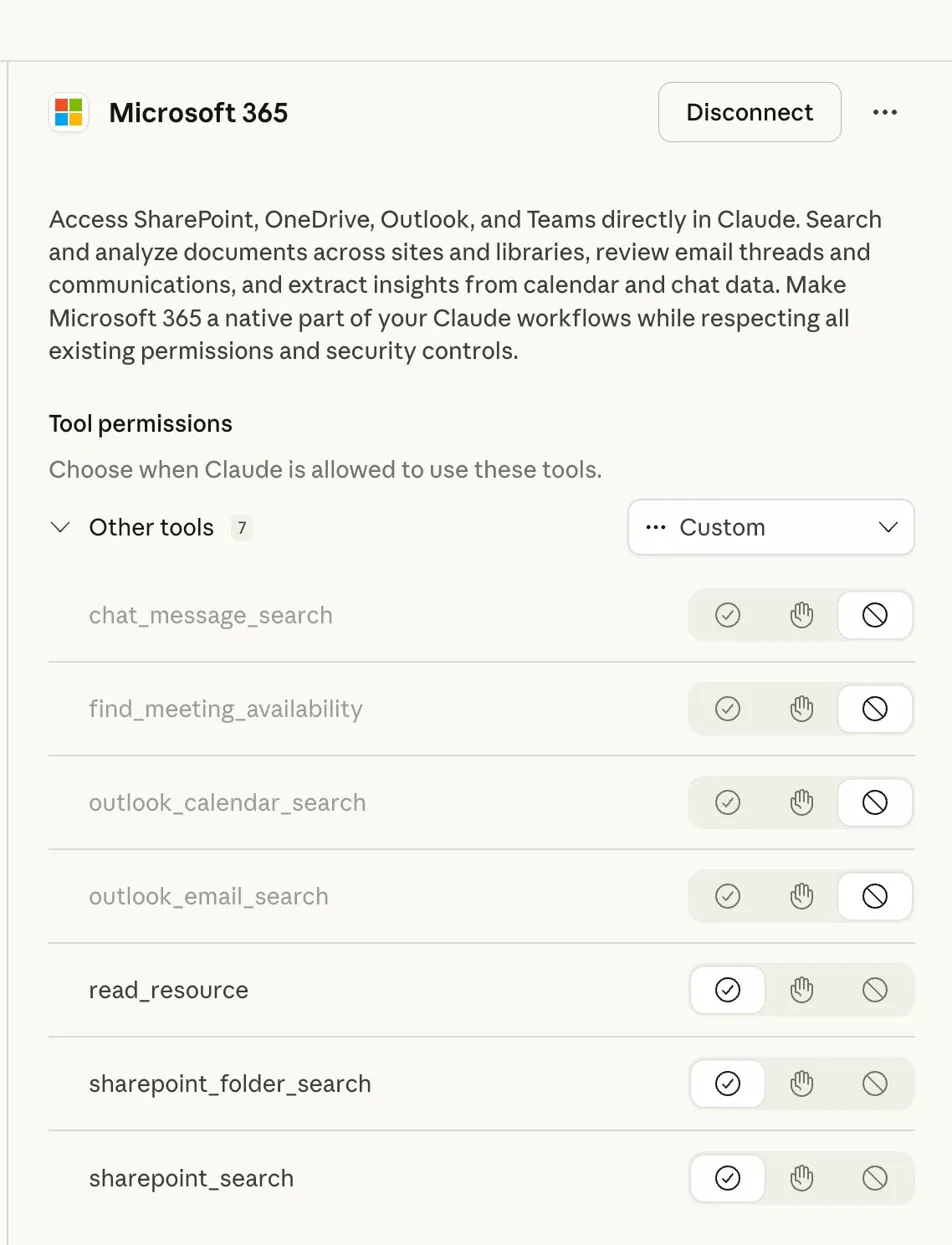
Click Configure and enable at least the minimum permissions shown below.
Claude M365 connector permissions
🗂️

Git

Required for Claude Code to run properly

↓ Download Portable Git
⚠️ please download: Portable ("thumbdrive edition") Git for Windows/x64 Portable

After download

1
Extract the downloaded file.
2
Right-click the extracted folder and select Copy as path.
3
Open PowerShell (search "PowerShell" in Start) and run the following command, replacing the path with the one you copied:
[System.Environment]::SetEnvironmentVariable("CLAUDE_CODE_GIT_BASH_PATH", "paste your path here", "User")
📝

Transcribe and summarise meeting notes

During the meeting

1
Open Jamie and click Start Jamie.
If you have enabled the Outlook Calendar connector, Jamie will capture your meeting name from your calendar automatically.

After the meeting

1
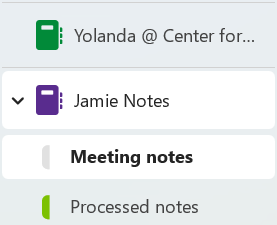
Jamie will automatically create a Jamie Notes notebook with a Meeting notes section in OneNote.
OneNote sidebar with Jamie Notes notebook
2
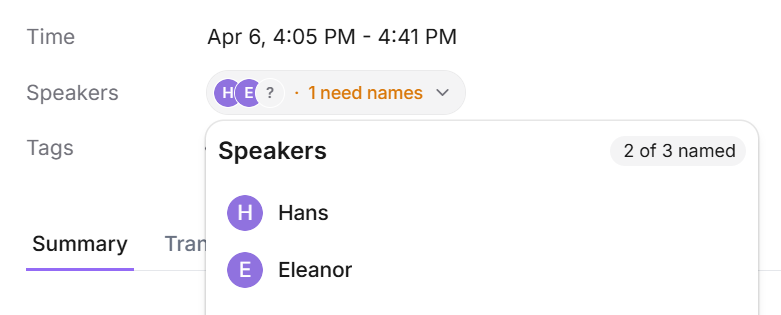
Assign speaker names to the transcript.
If you enabled the Outlook Calendar connector, Jamie will assign speaker names from your contacts automatically.
Jamie speaker name assignment

Get your summary

1
Open OneNote Desktop to sync your notes.
2
Open Claude Desktop and click Code at the top.
3
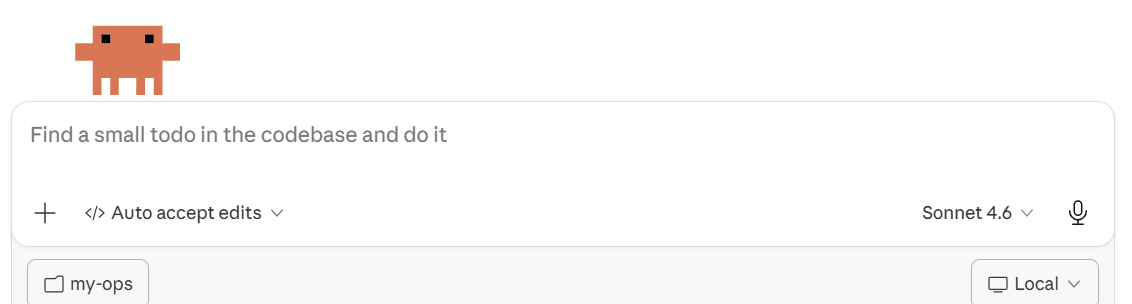
Start a new session, choose the my-ops folder under the chatbox, and select Auto-accept edits.
Claude Code session setup
⚠️ If you see this warning about Git, please return to Set up Git.
The error message will say: "Git is required for local session."
4
Simply ask Claude Code "process my notes", "process meeting notes", "clean up notes", "process new notes" or anything similar.
Claude will find all unprocessed notes in your Jamie Notes notebook, summarise them, and save the results to a Processed notes section.
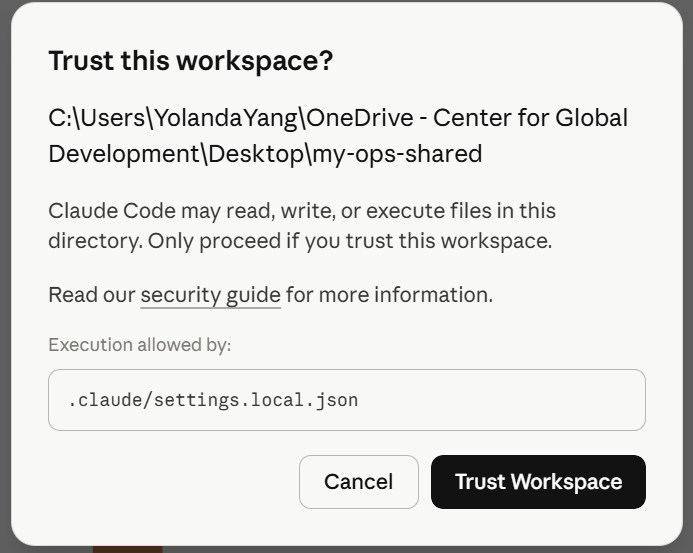
⚠️ You may need to allow access to the my-ops folder the first time.
Claude first session permission prompt
Claude first session permission prompt 2

Demo
📋

Get your weekly digest

Before you start

1
In Claude Desktop, go to Settings → Connectors → Microsoft 365, click Configure, and set outlook_email_search to Always allow.

Get your summary

1
Open Claude Desktop and click Code at the top, then choose the my-ops folder.
2
Simply ask Claude Code "weekly digest", "action items this week", "what do I need to do", "extract action items", "my tasks this week" or anything similar.
Claude will scan your Outlook inbox and processed meeting notes from the past 7 days, extract action items directed at you, and return a digest split into Needs Action and Resolved.

Demo
📄

Draft a grant progress report In Progress

Pull proposal outputs, search SharePoint and OneNote, draft progress details
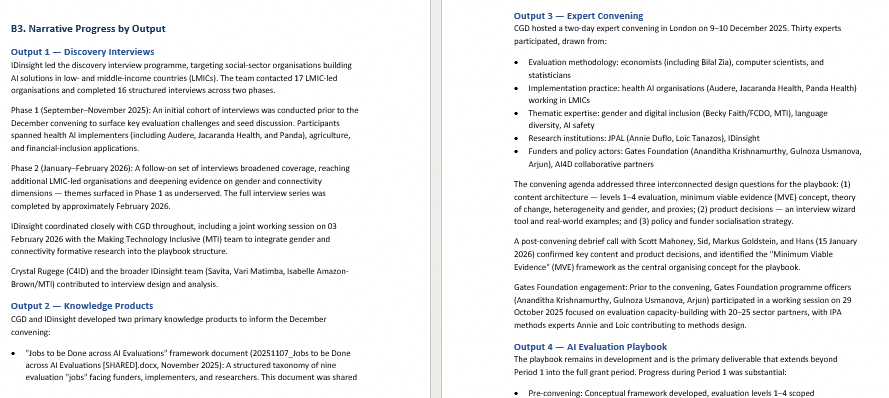
Give Claude any grant identifier — Salesforce ID, funder investment code, internal shorthand, grant name, or funder name — and it will find the original proposal on SharePoint, extract the promised outputs, pull evidence from SharePoint and OneNote, and draft the Progress Details and Outputs table. Gaps it can't fill are marked with [bracketed comments] and bold placeholders for manual input. Output is saved as a local .docx file.
How to trigger it
1
Open Claude Code in the my-ops folder.
2
Say "draft grant report", "write grant report", "grant reporting", "help with grant report", or "draft progress report".
3
Claude will ask for the grant identifier and reporting period, then run the full draft workflow.


Example output — AI Team Gates grant
Example grant report output for AI Team Gates grant

⚠️ Known blockers
1. Salesforce data
Claude has no direct Salesforce connector — the CLI and MCP both route through an anonymising proxy that will freeze a CGD Salesforce account. The current workaround being developed is a structured SharePoint folder to store Salesforce grant data so Claude can read it from there instead. This workflow is fully functional for grants whose proposal documents are already on SharePoint.
2. Undocumented institutional knowledge
Claude can only work with what is written down. If key context — programme strategy, funder relationship history, internal decisions — exists only in someone's head and was never logged in SharePoint, OneNote, or email, Claude cannot surface or fill it in. The draft will flag these gaps, but filling them requires you.
🔒

How is my data handled across each tool?

Jamie

Does Jamie record audio, and where is it stored?
Yes, temporarily. The audio recording from your computer is uploaded to a server in Frankfurt, Germany, and then processed on a serverless GPU environment. Once processing is done and your transcript is ready, all audio files are permanently deleted. Jamie complies with GDPR.
Are meeting participants informed or consented that they're being recorded?
Not automatically by Jamie. Since Jamie is bot-free, it does not join the meeting or send any automatic notifications to participants. The responsibility for ensuring transparency with participants lies with you/CGD as the data controller. There are two options: a manual announcement at the start of the meeting, or an automated email you can configure to notify attendees 24 hours in advance.
How long does Jamie retain transcripts?
Your Team's account admin can set up a time period for retaining transcripts on Jamie.
Will recordings and transcripts be used for training?
No. Your data is never used to train any models — not by Jamie, nor by any of their model providers.

Claude Code

Will my data be used to train Anthropic's models?
No. By default, it will not use your inputs or outputs from commercial products (e.g. Claude for Work, Anthropic API, Claude Gov, etc.) to train models.
Does Claude store or cache my files?
No. The connector only retrieves data on-demand during active queries and doesn't cache file content.

Microsoft 365 MCP Connector
Can Claude modify my Microsoft 365 files?
No. The M365 Connector gives Claude read-only access to SharePoint documents, OneDrive files, Outlook threads, and Teams conversations. No write access, no file modifications.
Does Anthropic have access to my Microsoft password?
No. You never share your Microsoft password with Anthropic. Access and refresh tokens are encrypted while cached by the Claude backend.
Can Claude access files or folders I don't have permission to see?
No. Claude inherits your permissions — it can only see and do what you can already see and do. There are no service accounts with elevated access. So if you don't have access to the HR folder, neither does Claude.
Is there audit logging for compliance?
Yes. All Graph API calls made by the connector are logged in your organization's Microsoft 365 audit log, accessible through the M365 Compliance Center. These logs show the timestamp, user, operation performed, and resource accessed, with retention periods matching your Microsoft 365 audit policy. Additionally, Anthropic logs authentication and tool execution events.
🍎

Does it support Mac?

Not currently. The current workflow of "Transcribe and summarise meeting notes" uses PowerShell's COM API to communicate with the OneNote desktop app and Claude Code, which is Windows-only.

💬

More questions?

Ask Yolanda.